
The Foot and Ankle
-A Simple Guide
Your foot and ankle help you stand, walk, and keep balance. The foot and ankle consists of 26 bones, 33 joints, and many muscles, tendons and ligaments.
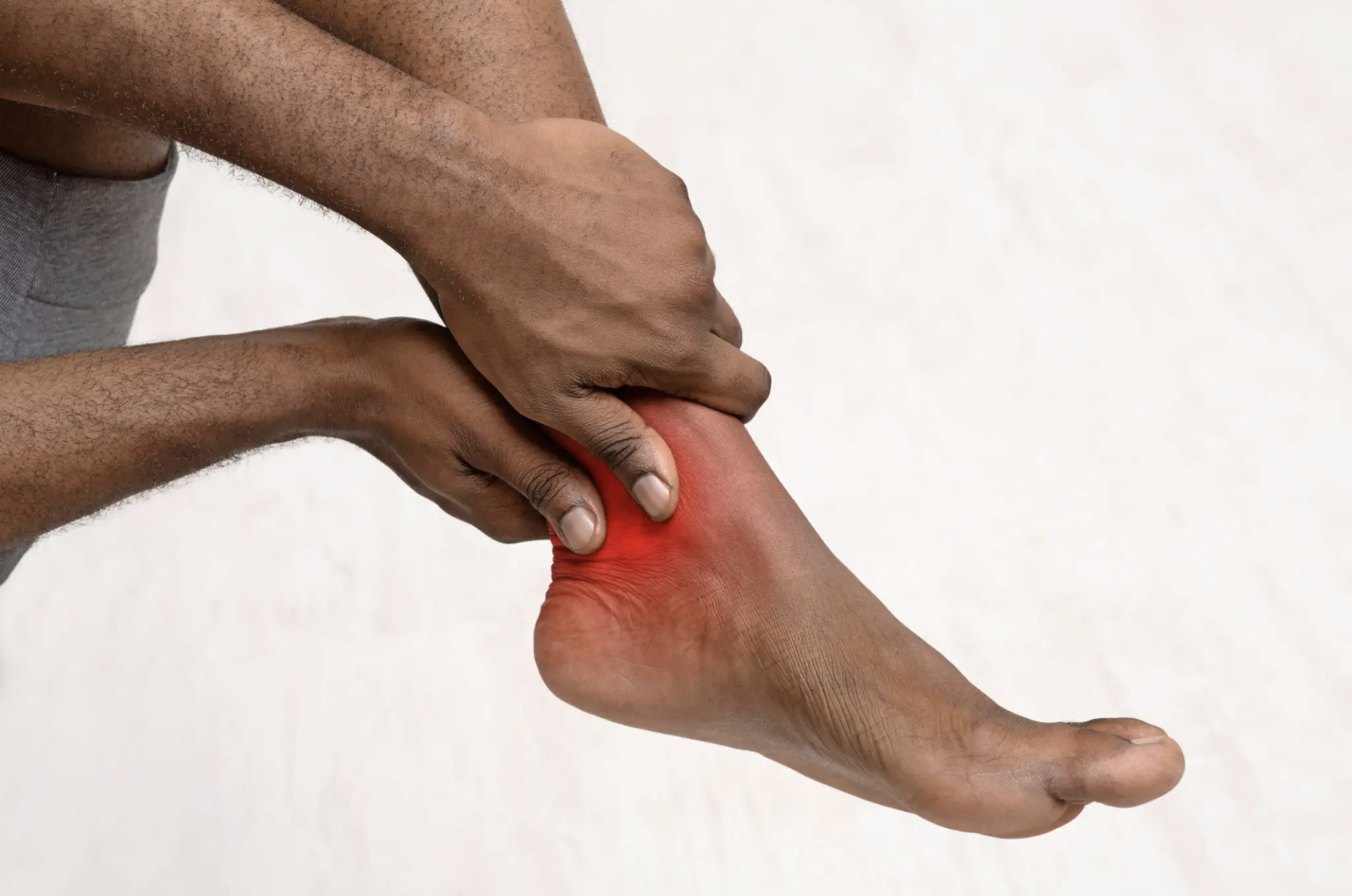
What Makes Up the Foot and Ankle?
Bones of the Ankle – The ankle joins your leg to your foot. It has three bones: the shin bone (tibia), the calf bone (fibula), and the ankle bone (talus). These bones let your foot move up and down. There are three bumps you can feel around your ankle: inside, outside, and back of your ankle.
Bones of the Foot – The foot has three parts: Hindfoot: ankle and heel bones. Midfoot: small bones in the middle. Forefoot: long bones and toe. Your big toe has special little bones that help it move.
Joints – Your foot and ankle have many joints that let you move your foot up, down, side to side, and bend your toes. The bones are covered with smooth cartilage that helps them slide easily and not hurt.
Soft Tissues – Ligaments hold the bones together and keep your foot steady. Muscles help move your foot and toes. Tendons connect muscles to bones. The strongest tendon is the Achilles tendon at your heel. Bursae are tiny sacs filled with fluid that stop rubbing and make movement smooth.
Common Disease Affecting the Adult Foot and Ankle
1. Plantar Fasciitis
Pain under the heel caused by irritation of the thick band of tissue (plantar fascia) that supports the arch.
2. Achilles Tendinitis
Inflammation of the Achilles tendon at the back of the heel, often from overuse.
3. Ankle Sprains and Instability
An ankle sprain happens when ligaments are overstretched or torn, usually from a twist or fall. Repeated sprains can lead to chronic ankle instability, where the ankle feels weak or gives way easily
4. Flat Feet (Pes Planus)
The arches of the feet are low or flattened, which can cause pain or tired feet.
5. Bunions (Hallux Valgus)
A bony bump at the base of the big toe that pushes it sideways, often leading to discomfort.
6. Morton’s Neuroma
Thickened nerve tissue between the toes, often causing burning or tingling pain in the ball of the foot.
7. Hallux Rigidus
Stiffness and arthritis in the big toe joint, making it hard or painful to bend.
8. Stress Fractures
Tiny cracks in the bones of the foot from repetitive impact, common in runners and active people.
9. Heel Spurs
Calcium buildup causing a bony lump under the heel, often linked to plantar fasciitis.
10. Posterior Tibial Tendon Dysfunction (PTTD)
Weakening of a key tendon on the inside of the ankle, leading to a collapsing arch and flatfoot over time.
Foot and Ankle Surgical procedures
Ankle Arthroscopy
A keyhole procedure to clean out the ankle joint, remove loose fragments, or treat damaged cartilage.
Ankle Ligament Repair (Broström Procedure)
Achilles Tendon Repair
Surgery to reattach or stitch together a torn Achilles tendon.
Plantar Fascia Release
Bunion Surgery (Hallux Valgus Correction)
Straightens the big toe and removes the bony bump at its base.
Morton’s Neuroma Excision
Removes thickened nerve tissue between toes to relieve nerve pain.
Hallux Rigidus Surgery (Cheilectomy or Fusion)
Removes bone spurs or fuses the big toe joint to treat arthritis and stiffness.
Flatfoot Reconstruction
Realigns the foot and strengthens tendons to correct adult-acquired flatfoot.
Foot or Ankle Fusion (Arthrodesis)
Fuses bones together to treat severe arthritis and relieve pain.
Tendon Transfer or Repair
Moves or repairs tendons to restore balance and strength in the foot or ankle.
Ankle Replacement (Total Ankle Arthroplasty)
Osteotomy (Bone Realignment)
Cuts and repositions bones in the foot or ankle to improve alignment.
Exostectomy (Bone Spur Removal)
Removes abnormal bone growths that cause pain or restrict motion.
Hammer Toe Correction
Straightens curled toes by cutting tendons or fusing joints.
Tarsal Tunnel Release
Releases pressure on a nerve inside the ankle to relieve pain or numbness.