
The Knee Joint –
A Simple Guide
The knee is a large hinge joint that helps you walk, run, sit, and stand. It’s made up of bones, cartilage, ligaments, muscles, and tendons — all working together for smooth movement and support.
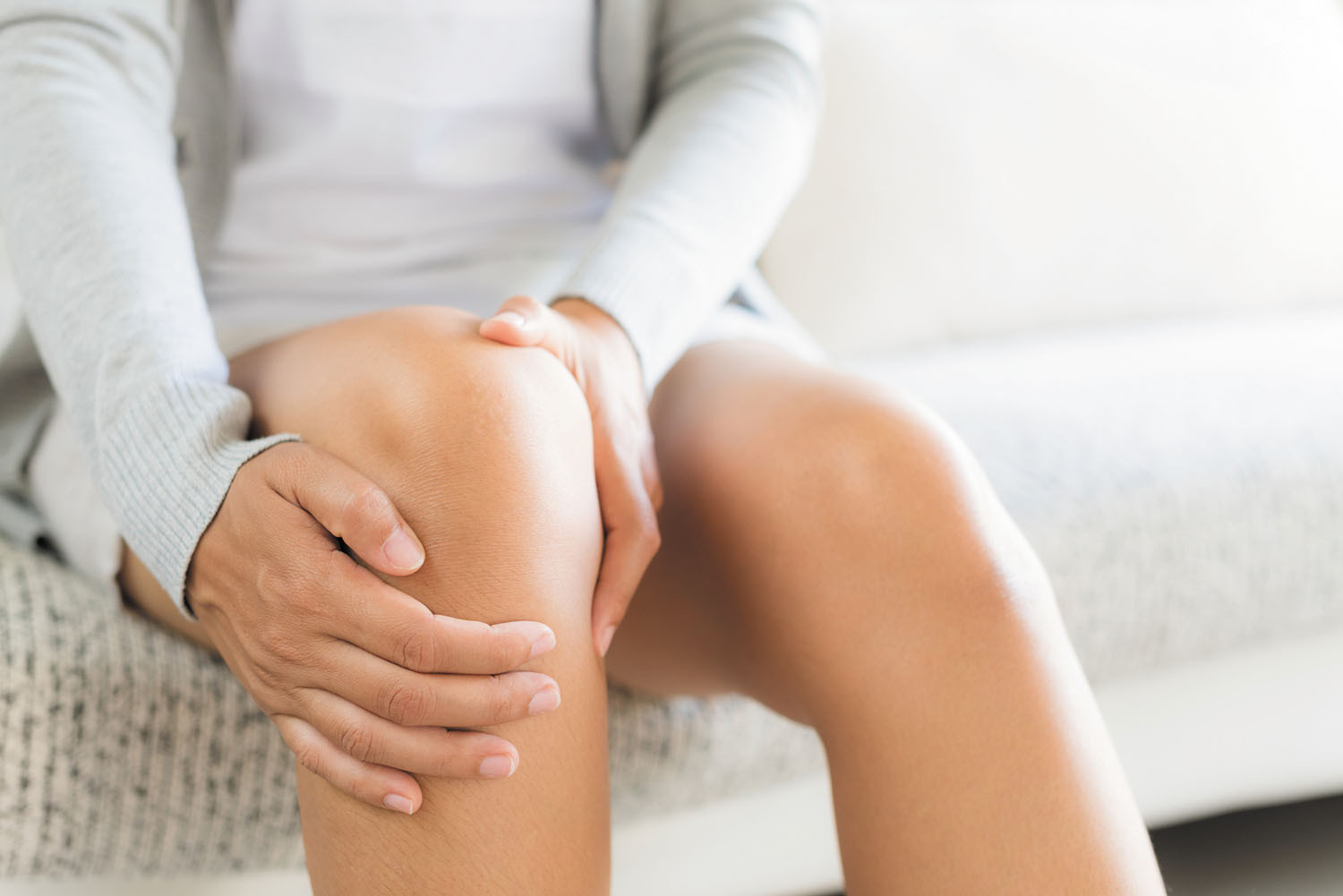
What Makes Up the Knee?
Bones – The knee connects the thigh bone (femur) to the shinbone (tibia). The kneecap (patella) sits in front and protects the joint. Another small bone, the fibula, runs alongside the tibia
Cartilage & Menisci – Smooth tissue called cartilage covers the bone surfaces to help them glide easily. Menisci are two C-shaped pieces of cartilage that cushion the knee and spread body weight evenly.
Ligaments – hold the knee together and keep it stable: MCL & LCL stop too much sideways movement. ACL & PCL control forward and backward movement inside the joint.
Muscles & Tendons
- The quadriceps (front thigh muscles) help straighten the knee.
- The hamstrings (back thigh muscles) help bend it.
- Tendons attach these muscles to bones to make movement possible.
Common Disease Affecting the Adult Knee
Knee Arthritis
The cartilage in the knee wears down, causing pain and stiffness. It makes moving and bending the knee difficult.
Knee Pain
General pain in or around the knee from injury, overuse, or other problems. It can be sharp, dull, constant, or come and go.
ACL Rupture
A tear of the key ligament that stabilizes the knee, often from sudden twisting. Causes pain, swelling, and instability.
Meniscal Tear
A rip in the knee’s cartilage cushion, usually from twisting or injury. Leads to pain, swelling, and trouble moving the knee smoothly, and occasionally locking.
Patellofemoral Instability
When the kneecap doesn’t stay properly in place, causing it to slip or feel unstable. This can cause pain and a feeling of the knee “giving way.”
Knee Sprain
Stretching or tearing of the knee ligaments from injury or sudden movement. Causes pain, swelling, and limited movement.
Runner’s Knee
Pain around the kneecap from overuse, especially in runners. Causes discomfort during activity and sometimes swelling.
Bursitis
Inflammation of the fluid sacs that cushion the knee, often from repetitive kneeling or injury. Leads to swelling and tenderness.
Patellar Tendonitis
Irritation or inflammation of the tendon connecting the kneecap to the shinbone. Causes pain, especially when jumping or running.
Knee Surgical Procedures
Total Knee Replacement:
The whole knee joint is replaced with an artificial one to relieve pain and improve movement.
Partial Knee Replacement:
Only the damaged part of the knee is replaced, keeping the rest of the knee natural.
Patellofemoral Stabilisation (Realignment):
The kneecap is adjusted to stay in the right place and prevent slipping or pain.
Knee Arthroscopy +/- Meniscal Repair:
A small (keyhole) camera and tools are used to visualise and fix knee problems, sometimes repairing torn cartilage.
ACL Reconstruction:
The torn ACL ligament is rebuilt using a graft to restore knee stability
High Tibial Osteotomy:
The shin bone is cut and reshaped to shift weight off the damaged part of the knee.