
The Shoulder Joint –
A Simple Guide
The shoulder is a complex ball and socket joint and the most flexible joint in the body. Because it moves so much, the shoulder isn’t very stable on its own. But muscles, tendons, and ligaments work together to keep it strong and steady.
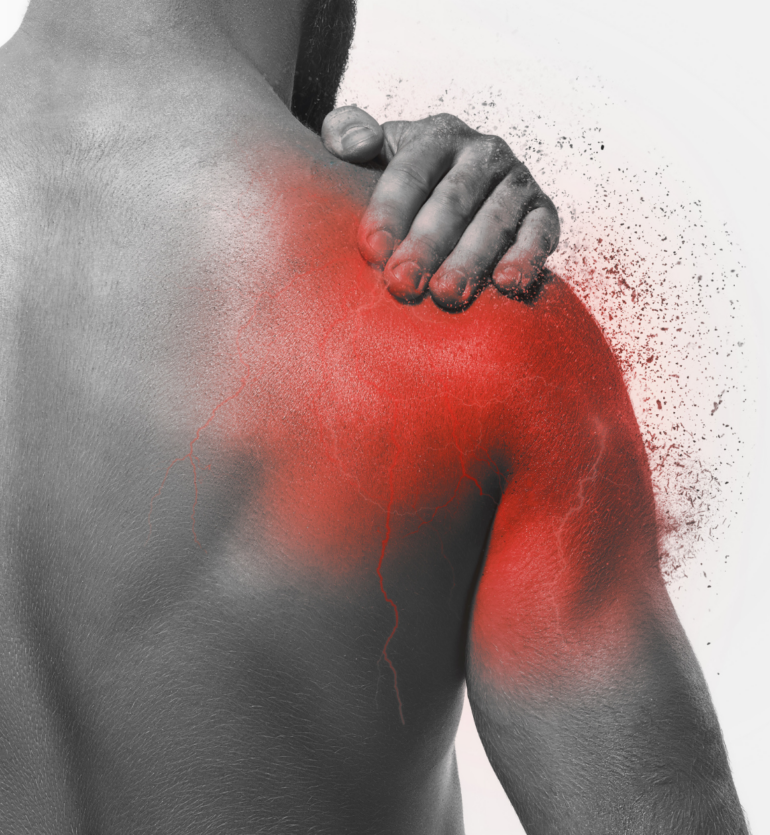
What makes up the shoulder?
Bones – The humerus (upper arm bone) forms the ball, the scapule (shoulder blade) creates the socket, the clavicle (collarbone) provides additional stability and protection of nerves and vessels.
Soft Tissues – Smooth cartilage covers the ends of the bones so they glide easily without rubbing. A ring of tough cartilage called the glenoid labrum deepens the socket to help hold the ball of the humerus firmly in place.
Ligaments – Ligaments are strong bands that connect bones: There are multiple around the shoulder that are critical to stability.
Muscles – The rotator cuff is a group of four muscles surrounding the shoulder joint. It holds the arm bone in place while allowing movement. The deltoid muscle is the largest shoulder muscle and covers the rotator cuff
Tendons – The biceps tendons connect the biceps muscle to the shoulder. The rotator cuff tendons connect the deeper muscles to the arm bone, adding stability and control.
Conditions Affecting the Adult Shoulder
Rotator Cuff Tear
The rotator cuff is a group of muscles that hold your shoulder in place. A tear can cause pain, weakness, and trouble lifting your arm.
Shoulder Impingement Syndrome
This happens when shoulder tendons get pinched during movement. It causes pain and limits how high you can raise your arm.
Frozen Shoulder (Adhesive Capsulitis)
The shoulder becomes stiff and painful, with limited movement. It often happens after injury or over time with no clear cause.
Shoulder Dislocation or instability
The upper arm bone slips out of the shoulder socket. It causes sudden pain, swelling, and loss of shoulder movement.
Shoulder Arthritis
Wear and tear of the shoulder joint cartilage leads to pain and stiffness. It can make everyday activities difficult.
Bursitis
Inflammation of the fluid sacs that cushion the shoulder joint. This causes pain, especially when moving or pressing on the shoulder.
Shoulder Tendinitis
Tendons around the shoulder become irritated or inflamed from overuse. It causes pain and weakness during arm movements.
Labral Tear
A tear in the cartilage ring around the shoulder socket. It can cause pain, clicking, or a feeling of instability.
SLAP Tear (Superior Labrum Anterior to Posterior)
A specific type of labral tear at the top of the shoulder socket. It often causes pain with overhead activities and a catching sensation.
Biceps Tendon Rupture
This is when the tendon connecting the biceps muscle to the shoulder tears. It causes sudden pain, weakness, and a bulge in the upper arm.
ACJ Dislocation (Acromioclavicular Joint Dislocation)
The joint where the collarbone meets the shoulder blade gets separated or torn. It causes pain, swelling, and a visible bump on the top of the shoulder.
Shoulder Surgical Treatments
Arthroscopic Rotator Cuff Repair
Shoulder Arthroscopy
A minimally invasive surgery to look inside the shoulder and treat problems like tears, inflammation, or loose bodies.
Shoulder Replacement (Total or Partial)
Damaged shoulder joint parts are replaced with artificial implants to relieve pain and restore motion.
AC Joint Reconstruction
Surgery to repair or reconstruct the acromioclavicular joint after dislocation or severe injury.
Bankart Repair
This surgery fixes a specific labral tear caused by shoulder dislocations to prevent repeat dislocations.
Capsular Release
Tight or scarred shoulder joint capsule is cut to improve movement, often used for frozen shoulder.
Biceps Tenodesis
The torn or damaged biceps tendon is detached and reattached to the upper arm bone to relieve pain and restore function.
Subacromial Decompression
The space above the rotator cuff is cleared of bone spurs or inflamed tissue to reduce impingement and pain.
Latarjet Procedure
Bone and tendon are moved to the front of the shoulder socket to prevent repeated shoulder dislocations.